

Skip to content

Well Pressure Tanks

If your home runs on a private well, your well pressure tank is doing more work than you might realize. This component sits at the heart of your well system, keeping water pressure steady and your pump protected. When it starts to fail, you feel it fast, and the consequences can be costly if left unaddressed. At Hague Quality Water of Maryland, our licensed plumbers have been servicing, repairing, and replacing well pressure tanks for homeowners across Maryland and Delaware since 1993.

What Is a Well Pressure Tank and How Does It Work?

A well pressure tank is one of three main components of a residential well system, alongside the well pump and the pressure switch. It stores water and regulates the pressure that delivers water throughout your home and protects your pump by acting as a buffer so the pump does not have to switch on every time you open a faucet. Without a water pressure tank, that constant cycling would wear the pump down and lead to premature failure.

Inside the tank, compressed air and water work together. When you open a faucet, the air pressure pushes water out. As the tank empties and pressure drops to a set low point, the pressure switch signals the pump to turn on, refill the tank, and shut back off. A properly sized tank should hold enough water to equal roughly one minute of your pump’s output, enough time for the pump to cool itself with fresh water and avoid short cycling. If your pump is turning on more frequently than that, your tank may be undersized for your system.

Types of Well Pressure Tanks

Air-Over-Water Tanks

Air-over-water tanks are the oldest and simplest design. There is no physical barrier between the air and the water inside the tank. Over time, the air dissolves into the water, which means these tanks need to be recharged with air on a regular basis. They are also prone to waterlogging and corrosion.

If your home still has an air-over-water tank, there is a good chance it is either already causing problems or approaching the end of its useful life. Our plumbers can assess the condition of your current tank and advise you on whether a repair will hold or whether an upgrade makes more sense.

Diaphragm Tanks

Diaphragm style pressure tanks use a vinyl or rubber diaphragm to separate the air from the water inside the tank. When water enters, the diaphragm flexes and compresses the air on the other side. This design reduces direct contact between air and water, which cuts down on maintenance compared to air-over-water models.

That said, diaphragm tanks still have failure points, particularly if the diaphragm ruptures or the valve develops a leak. These failures can be subtle at first, which is why homeowners miss early warning signs. Hague’s plumbers know what to look for and can catch diaphragm wear before it becomes a full system disruption.

Bladder Tanks

Bladder style pressure tanks are the most advanced of the three types. Rather than a partial barrier, they use an internal bladder that completely contains the water, keeping it fully separated from the air charge in the tank at all times. This design is virtually maintenance-free, offers the longest service life, and delivers the most consistent water pressure.

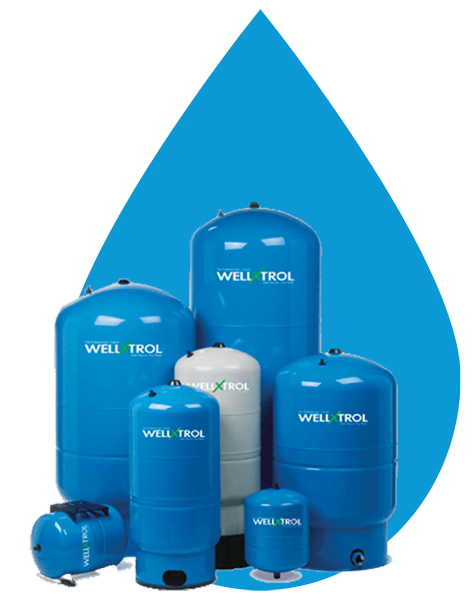
For most residential well systems, a bladder style tank is the best long-term choice. When Hague replaces an older tank, this is what we typically recommend. We size it correctly for your pump and household demand so you get the full benefit of the upgrade.
Signs Your Well Pressure Tank Needs Service

Well pressure tanks are built to last, but they do fail. The sooner you catch a problem, the better your chances of avoiding a more expensive repair down the line. Contact Hague Quality Water of Maryland right away if you notice any of the following:

  • A sudden, significant drop in water pressure
  • Pressure surges or noticeable fluctuations throughout the day
  • A constant clicking or rapid clicking sound coming from the pressure switch
  • Leaking water near the tank
  • Air sputtering out of your faucets
  • An unusually high electric bill, which can signal that your pump is running more than it should

None of these symptoms point to a single guaranteed cause on their own. A pressure drop could mean a failing tank, a pump problem, or a combination of both. That is why our plumbers inspect the full system, including the tank, pump, pressure switch, and related components, to trace the problem to its actual source. Getting the diagnosis right the first time saves you money and prevents the same issue from coming back.

One symptom worth paying close attention to is short cycling, when your pump turns on and off in rapid succession rather than running through a full cycle. Short cycling puts tremendous stress on the pump motor, generating heat that leads to premature failure. It is one of the more urgent pressure tank problems we see, and our team can identify whether the tank, the pressure switch, or something else is driving it.

Common Well Pressure Tank Problems

If you are experiencing any of the symptoms above, one of these underlying issues is likely to blame:

  • Corrosion: Over time, the inside of a tank or its connected pipes can corrode, leading to leaks. Corrosion is especially common in older tanks or systems exposed to aggressive water chemistry.
  • Air bladder or Schrader valve failure: If the bladder ruptures or the air valve leaks, the tank loses its ability to hold a proper air charge. This is one of the most common failures we encounter, and it is a frequent driver of the short cycling and waterlogging that homeowners notice first.
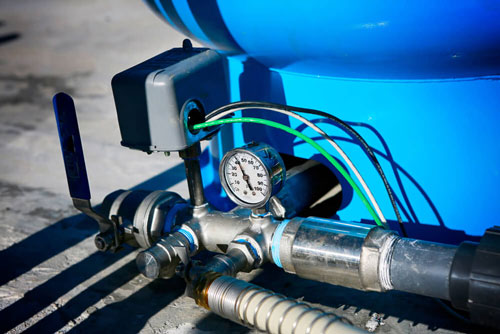
  • Pressure switch failure: The pressure switch controls when your pump turns on and off. A faulty switch can cause the pump to run continuously, not run at all, or cycle erratically. Our plumbers can test the switch and determine whether the switch itself is the problem or whether it is responding to a larger system issue.
  • Faulty wiring: Electrical problems connected to the pump or pressure switch can mimic the symptoms of tank failure. Hague’s technicians are equipped to test electrical components alongside mechanical ones so nothing gets overlooked.
  • Short cycling: Short cycling is both a symptom and an accelerant. The longer it runs unchecked, the more damage it does. We treat it as an urgent finding and work quickly to identify and correct the root cause.

Well Pressure Tank Repair vs. Replacement

Not every pressure tank problem calls for a full replacement. Some issues, like a failed pressure switch, faulty wiring, or a leaking valve, can be repaired without replacing the tank itself. However, if the tank is waterlogged, heavily corroded, or the bladder has failed, replacement is typically the more practical and cost-effective route.

Age is also a factor. Older tanks that have already been repaired once or twice are often better served by replacement than by another round of repairs. A new bladder tank installation will give you years of reliable, low-maintenance performance.

At Hague Quality Water of Maryland, we assess each situation on its own merits. Our plumbers give you a straight answer about what your system actually needs, whether that is a targeted repair or a full replacement. No guesswork, no upselling, just honest guidance from a team that has been doing this for over 33 years.

Well Pressure Tanks and Your Well Pump: A Connected System

Your pressure tank and your well pump work as a team. When the tank starts to fail, the pump picks up the slack, which accelerates wear on both components. Hague offers well pump service and repair alongside pressure tank work, so we look at your system as a whole. If pressure problems continue after your tank has been serviced, we will evaluate your pump and make sure nothing is being missed.

For homeowners dealing with chronic low pressure, a constant pressure system may be worth considering. These variable-speed systems adjust pump output to match your household’s real-time demand, delivering consistent water pressure throughout your home regardless of how many fixtures are running at once. Our team can assess your well yield, your pump, and your household demand and tell you whether this upgrade is a good fit for your property.

Well Pressure Tank Service in Maryland and Delaware

Hague Quality Water of Maryland is a family-owned, full-service water treatment and plumbing company serving Maryland and Delaware since 1993. Our licensed plumbers are experienced with the well systems and water conditions specific to this region, and we bring that local knowledge to every job.

When you call Hague for well pressure tank service, you can expect:

  • A thorough inspection of your pressure tank, pump, and pressure switch to identify the root cause of the problem
  • Honest recommendations on whether repair or replacement is the right call for your situation
  • Professional installation of replacement tanks, pressure switches, and related components
  • Upfront pricing with no surprise charges after the job is done
  • Same-day service based on availability, so you are not left without water longer than necessary

Whether you are dealing with a clear failure or just something that does not feel quite right, we’re here to help you figure it out. We offer free consultations and upfront pricing with no surprises. Call us or request service online to schedule an appointment.

Frequently Asked Questions

Most bladder and diaphragm tanks last anywhere from 10 to 15 years with proper maintenance. Older air-over-water tanks tend to have shorter lifespans and require more frequent attention.

A waterlogged tank feels completely full of water with no air charge left inside. The clearest sign is a pump that short cycles rapidly, turning on and off every few seconds. A licensed plumber can confirm this with a simple inspection.

Yes. A failing pressure tank forces the pump to cycle far more often than it should, which generates excess heat and puts strain on the motor. Catching and fixing pressure tank problems early is one of the best ways to protect your pump.

Bladder tanks require very little routine maintenance, but an annual inspection is a smart habit. A technician can check the air pressure, inspect for corrosion, and catch any developing issues before they turn into larger problems.