

Water treatment is a broad term for any process that improves water quality, including softening, disinfection, and filtration. Water filtration is one specific type of water treatment that physically removes particles, sediment, and certain contaminants as water passes through a filter media. Most Maryland homes need a combination of both to address hardness, staining, odors, and health-related contaminants like PFAS or manganese.
If you’ve ever stared at a rust-colored ring in your bathtub or wondered why your tap water smells like sulfur, you’ve probably searched for a fix and found two terms used almost interchangeably: water treatment and water filtration. They sound similar, but they’re not the same thing, and understanding the difference matters if you want to actually solve your water problem instead of just masking it.
Maryland’s water supply is famously inconsistent. Homes on the Eastern Shore often pull from iron-heavy private wells, while properties in Baltimore and Annapolis typically receive chlorine-treated municipal water. That variation means there’s no single fix that works for every household. Knowing what water treatment and water filtration each do, and when you need one, the other, or both, helps you make a smarter decision for your home.
What is water treatment?
Water treatment refers to any process designed to improve the overall quality, safety, or usability of water. It’s an umbrella term that covers a wide range of technologies and methods, including:
- Water softeners, which remove calcium and magnesium to reduce hardness
- Filtration systems, which remove sediment and contaminants
- Disinfection methods, such as UV treatment or chlorination
- Specialized treatment equipment for specific contaminants like iron, manganese, or PFAS
Because water treatment is such a broad category, a “water treatment system” for one home might look completely different from another. A household on well water dealing with iron staining needs a very different setup than a home on municipal water dealing with chlorine taste and odor.
What is water filtration?
Water filtration is a specific type of water treatment. It works by passing water through a physical or chemical filter media that traps particles, sediment, and certain dissolved contaminants before the water reaches your tap. Filtration doesn’t soften water or remove hardness minerals the way a softener does; its job is to capture and remove impurities.
Whole-home water filtration systems are installed at the point where water enters your house, treating every tap and appliance rather than just your kitchen sink. This matters for contaminants that affect more than just drinking water, since chlorine, sediment, and certain chemicals can also impact skin, laundry, and plumbing fixtures over time.
What’s the difference between water treatment and water filtration?
Think of water treatment as the destination and water filtration as one of several roads that can get you there. Every filtration system is a form of water treatment, but not every water treatment system is a filter.
Here’s a simple way to break it down:
| Water Treatment | Water Filtration | |
| Scope | Broad category covering multiple methods | One specific method within that category |
| Primary function | Improves overall water quality, taste, and safety | Physically removes particles and contaminants |
| Handles hardness? | Yes, through water softeners | No, filtration alone won’t soften water |
| Handles sediment/chemicals? | Depends on the system | Yes, that’s its main job |
| Best for | Comprehensive, whole-home solutions | Targeting specific contaminants or particles |
Choose a water softener if hardness, scale buildup, dry skin, or spotty dishes is your main concern. Choose a filtration system if your priority is removing sediment, chlorine taste, or specific contaminants. Choose a combined water treatment system if you’re dealing with multiple issues at once, which is common for many Maryland households.
Common water problems in Maryland homes
Not sure what’s actually causing the stains, odors, or health concerns in your home? Maryland’s geography and water sources create a few recurring issues that our team at Hague Quality Water of Maryland sees again and again.
Iron and brown staining
Rust-colored stains on sinks, toilets, and laundry are one of the most common signs of iron in your water. Iron doesn’t just look unpleasant; it can discolor fixtures permanently and leave clothing looking dirty even right after washing. This issue is especially common in well water across the Eastern Shore.
Manganese
Manganese often shows up alongside iron in Maryland well water and can cause black or dark brown staining. While it’s less commonly discussed than iron, manganese in water can also carry health considerations at higher concentrations, which is why testing matters.
PFAS contamination
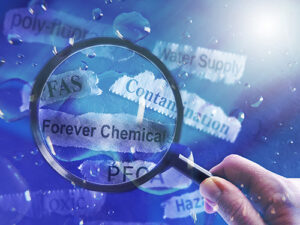
Short-Chain PFAS have become a growing concern in Maryland’s drinking water. These “forever chemicals” don’t break down easily in the environment and have been detected in various water systems across the state. Because PFAS can’t be seen, tasted, or smelled, testing is the only reliable way to know if they’re present in your water.
Hard water
Homes on municipal or well water alike can struggle with hardness caused by dissolved calcium and magnesium. Hard water leads to scale buildup in pipes and appliances, dry skin, and soap that doesn’t lather properly.
Chlorine taste and odor
Municipal water in the Baltimore and Annapolis areas is treated with chlorine to keep it safe for public consumption. While necessary for disinfection, chlorine can leave water tasting or smelling unpleasant straight from the tap.
Which solution is right for your Maryland home?
The right water treatment approach depends on your water source, your specific contaminants, and how the water is used throughout your home. Here’s how to think through the decision:
- If you’re on a private well, start with well water treatment and testing. Well water is more likely to carry iron, manganese, bacteria, or sediment that municipal water systems have already filtered out.
- If your water smells or tastes off but tests show low contaminant levels, a filtration system may be all you need to address chlorine taste and odor.
- If you’re dealing with hardness, scale, spots, or dry skin, a water softener is the better fit. Traditional water softeners work well for most households, while compact water softeners suit homes with limited space.
- If you have multiple issues at once, a whole-home water filtration system paired with a softener often provides the most complete solution.
- If you’re unsure what’s actually in your water, professional water testing should always come first. Guessing at a solution before testing can mean paying for equipment that doesn’t address your actual problem.
Why Maryland homeowners choose Hague Quality Water for water treatment
Hague Quality Water of Maryland has provided water treatment Maryland homeowners can rely on since 1993. As a family-owned and operated company serving Maryland, Washington, D.C., and Delaware from our Annapolis and Ocean City offices, we understand the state’s water better than most, from the iron-heavy well water of the Eastern Shore to the chlorine-treated supplies around Baltimore and Annapolis.
A few things set our approach apart:
Certified water specialists you can trust. Every technician on our team is licensed, certified, and insured. When someone from Hague arrives at your home, they’re trained to accurately diagnose your water problem and recommend the right solution, not just the most expensive one.
Free water testing and consultation. Before you spend a dollar on treatment, we’ll help you understand exactly what’s in your water through a free professional water analysis. It’s the right way to start, and it costs nothing.
Local expertise you can count on. We’ve been Maryland’s local, family-owned water treatment provider for over 30 years, which means we’ve seen nearly every water issue this region can produce.
Flexible financing options. Water problems shouldn’t have to wait because of cost. We offer financing so clean, safe water is accessible for your family.
Beyond the water treatment systems Annapolis, MD residents depend on, we also provide water softeners, whole-home filtration, water testing, well pumps, water heaters, well pressure systems, water heater repair Annapolis, water coolers, and residential plumbing services. Whatever is happening with your water or your pipes, our team can help identify the cause and fix it.
Start with a free water test
Water treatment and water filtration solve different problems, and the best results usually come from matching the right system to your specific water issue rather than guessing. If you’re dealing with staining, odor, hardness, or simply want peace of mind about what’s coming out of your tap, the smartest first step is professional water testing.
Contact Hague Quality Water of Maryland today to schedule your free water analysis and find out exactly what solution your home needs.
Frequently Asked Questions
Is a water softener the same as a water filter?
No. A water softener specifically removes calcium and magnesium to reduce hardness, while a water filter removes sediment, particles, and certain contaminants. Some whole-home systems combine both functions.
How much does water treatment cost in Maryland?
Costs vary based on your water quality, the size of your home, and the type of system needed. Hague Quality Water of Maryland offers a free water analysis and flexible financing options to help make treatment affordable.
Do I need water testing if I’m on municipal water?
Yes. While municipal water is treated for safety, it can still contain chlorine byproducts, hardness minerals, or emerging contaminants like PFAS. Testing tells you exactly what’s present so you can address it directly.
What’s the risk of not treating well water?
Untreated well water can contain iron, manganese, bacteria, and sediment that affect both your health and your plumbing. Well water treatment Maryland homeowners rely on typically starts with a thorough water test to identify specific risks.
Are there alternatives to whole-home filtration?
Yes. Point-of-use filters, such as under-sink or pitcher filters, can address drinking water alone. However, whole-home water filtration systems protect all your fixtures and appliances, not just your kitchen tap.